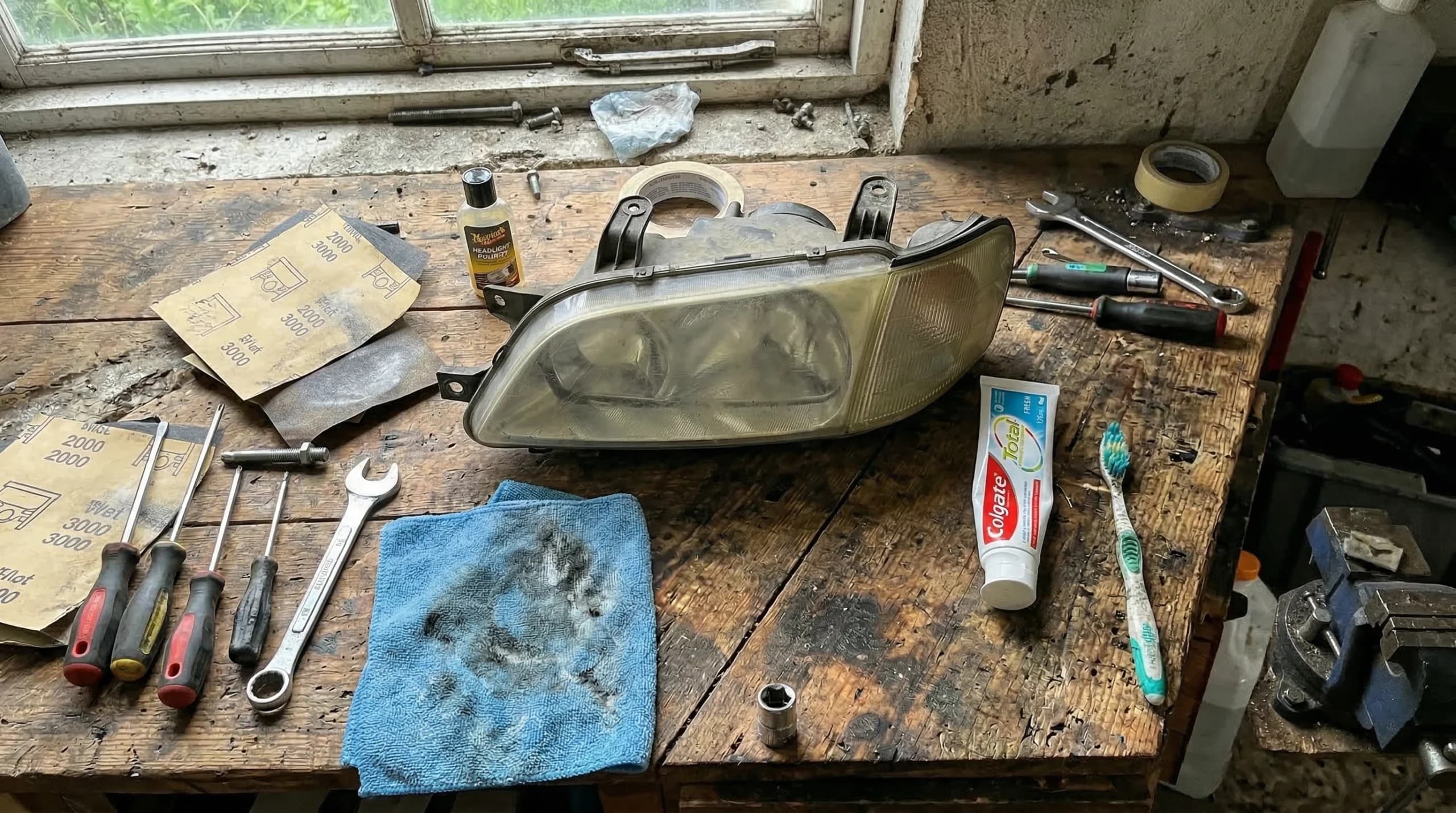
It's probably the most widespread DIY hack on the internet. "Put toothpaste on your headlights, rub it, and they'll clear right up." You see it everywhere: Reddit, Facebook, YouTube, TikTok. Everyone's got a brother-in-law who tried it. But does it actually work?
The Science Behind the Hack
Toothpaste contains silica, a very fine abrasive. That's what cleans your teeth. And yes, this silica can remove some of the oxidized layer on your polycarbonate headlights. It's legit. Toothpaste acts like a very gentle, very light polish.
So yeah, it "works." But we need to be clear about what "working" actually means here.
What Toothpaste Actually Does
Toothpaste will remove the top layer of dirt and a very thin layer of oxidation. Your headlights will look a bit clearer afterward. You'll think it worked. And for a week or two, it'll actually look better.
The problem is that toothpaste is too gentle to remove the entire oxidized layer. It just scratches the surface. It's like sweeping a floor that needs to be sanded. It gets rid of the dust, but the real problem is still there.
And most importantly, toothpaste provides zero protection after cleaning. The bare plastic is exposed directly to UV rays. The yellowing comes back in a few weeks. You're back to square one. We explain why protection is key in our article on ceramic coating for headlights.
The Risks
The main risk is creating micro-scratches. If you use whitening toothpaste with larger particles, or if you rub with a dry, dirty cloth, you can scratch the headlight surface. Circular scratches that scatter light unevenly at night. We talk about the difference between scratches and cloudiness in our article scratched vs. cloudy headlights.
The other risk is giving yourself a false sense of security. Your headlights look a bit better, so you think the problem is fixed. But the loss of brightness is still there. You're driving at night thinking your headlights are fine, when they're still giving off 30% less light than they should.
The Verdict
Toothpaste can work in a pinch if you've got absolutely nothing else and your headlights are just slightly dull. As a temporary fix for 2-3 weeks. But as a restoration method, it's not adequate. It doesn't fix the problem at its root and it doesn't protect the result.
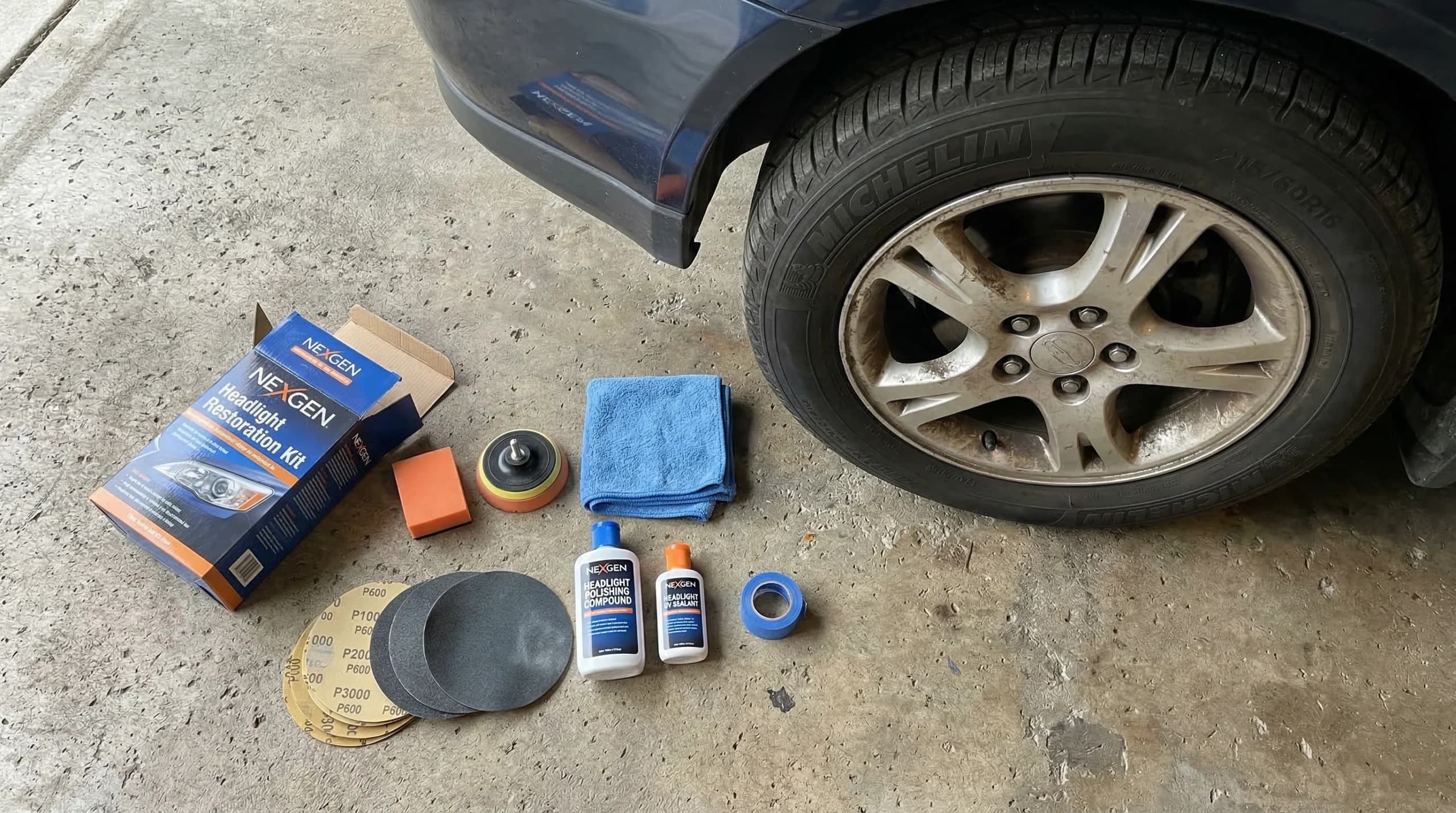
For a restoration that lasts, you need progressive sanding, mechanical polishing, and a protective coating. That's what we do. And it lasts 2 to 3 years instead of 2 to 3 weeks.
Book an appointment at leroidesphares.ca for a restoration that'll actually last. We come to you in Montreal and on the South Shore.