Ever parked next to a brand-new car and noticed how beat-up your headlights look in comparison? It's not just about appearance. Yellowed or cloudy headlights directly affect your visibility at night. Here in Quebec, with our long winters and salt-covered roads, the problem shows up faster than you'd think.
Why Your Headlights Turn Yellow or Cloudy
Modern headlights are made from polycarbonate, a lightweight plastic that's tough against road impacts. Great for taking hits from highway rocks. But that material has one major flaw: it doesn't handle UV rays from the sun very well. Over time, the outer layers of the plastic degrade and become cloudy.
In Quebec, we've got the perfect storm to speed things up. Road salt used for de-icing in winter attacks the headlight surface. Add dust, dead insects in summer, and temperature swings between -30°C and +30°C, and your headlights take a real beating.
Most vehicles start showing yellowing after 3 to 5 years. If your car sits outside instead of in a garage, it can happen even faster. We regularly see cars from 2019-2020 with pretty heavily damaged headlights already. Not sure if yours are at that point? We wrote an article on the 5 signs it's time to restore your headlights to help you figure it out.
DIY Solutions: Do They Actually Work?
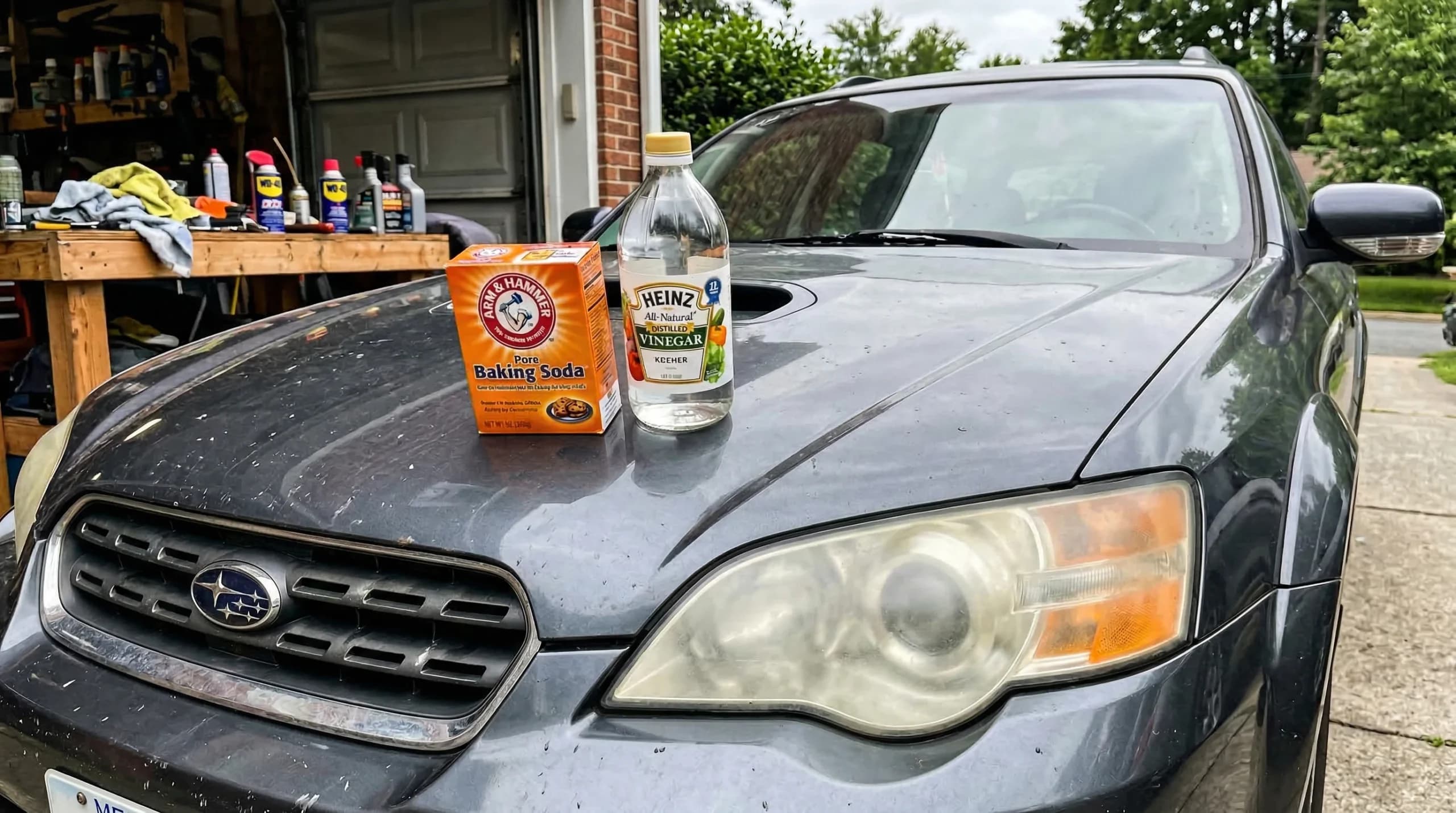
You see a lot of tricks online. Toothpaste, baking soda, white vinegar. Do they work? Sort of. Temporarily.
Toothpaste contains mild abrasive agents that can remove some of the cloudy layer on the surface. The problem is, the effect lasts a few weeks at best. You've done nothing to protect the headlight afterward, so the yellowing comes back pretty quickly. You end up doing the same thing again every couple of months.
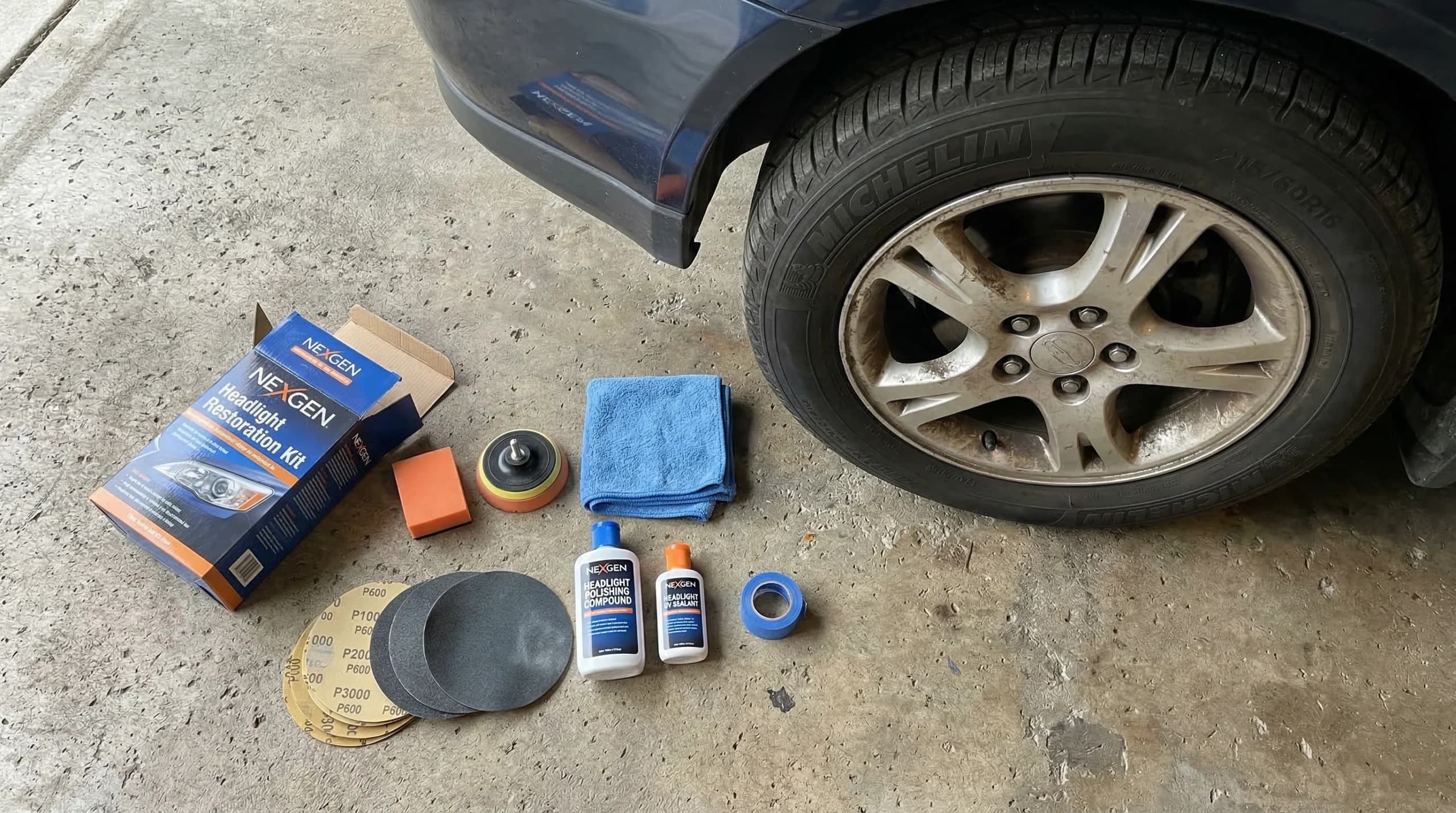
Renovation kits sold at Canadian Tire or online give better results. They usually include sandpaper, a polishing product, and sometimes a sealant. But you need to be comfortable with sanding. If you go too hard or use the wrong grit, you risk scratching your headlights for good. And then it's worse than before.
Professional Restoration: The Difference Is in How Long It Lasts
A professional headlight restoration service is way more than a quick polish. The process involves progressive sanding with different grits to remove all the oxidized layer without damaging the plastic. Then precision polishing restores the headlight's original clarity.
The real difference is what comes next. Applying a protective coating—whether ceramic or UV-blocking—prevents yellowing from coming back for 2 to 3 years. That's the step that makes the results last. DIY methods skip this step, which is why the yellow returns so fast. We explain in detail why ceramic coating makes such a huge difference in our article on ceramic coating for headlights.
When a pro comes to your place with mobile equipment, you don't lose your whole day at a garage either. The treatment takes about 30 to 45 minutes and you're back on the road right after. Honestly, it takes less time than waiting in line at Tim Hortons on a Saturday morning.
If you're torn between restoration and replacing your headlights completely, we laid out the cost comparison in our article restoration vs replacement. Spoiler: restoration wins 9 times out of 10.
When Should You Act?
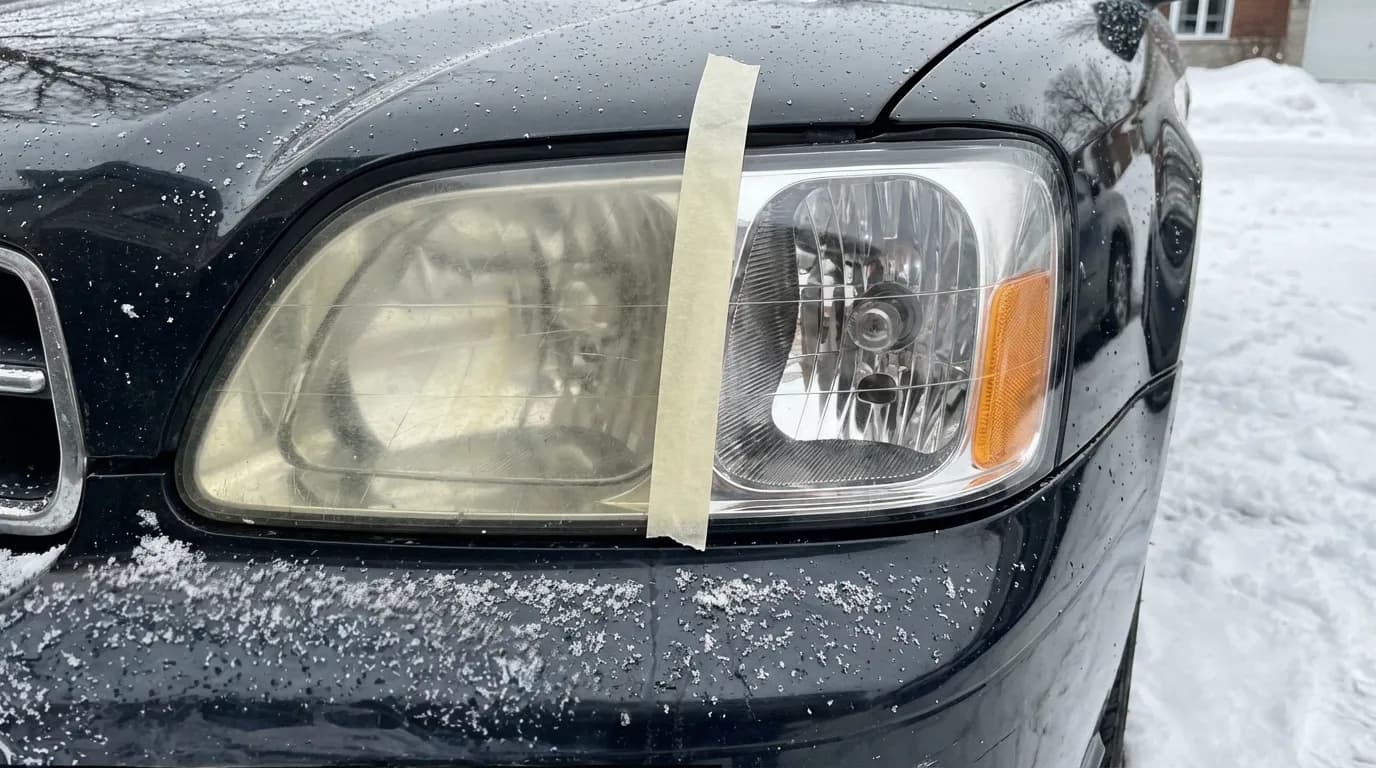
If your headlights have a yellowish or milky look, it's time to deal with it. Don't wait for the problem to get worse. The more advanced the oxidation, the longer the treatment takes. And if the plastic is too damaged deep down, the results can be limited.
A good indicator: if you feel like you're not seeing as well at night as you used to, or if someone mentions that your headlights look "hazy," that's your signal to get a restoration done. Your car is sending you a message. Listen to it.
Check our rates and book an appointment: we come to you in Montreal and the South Shore.